


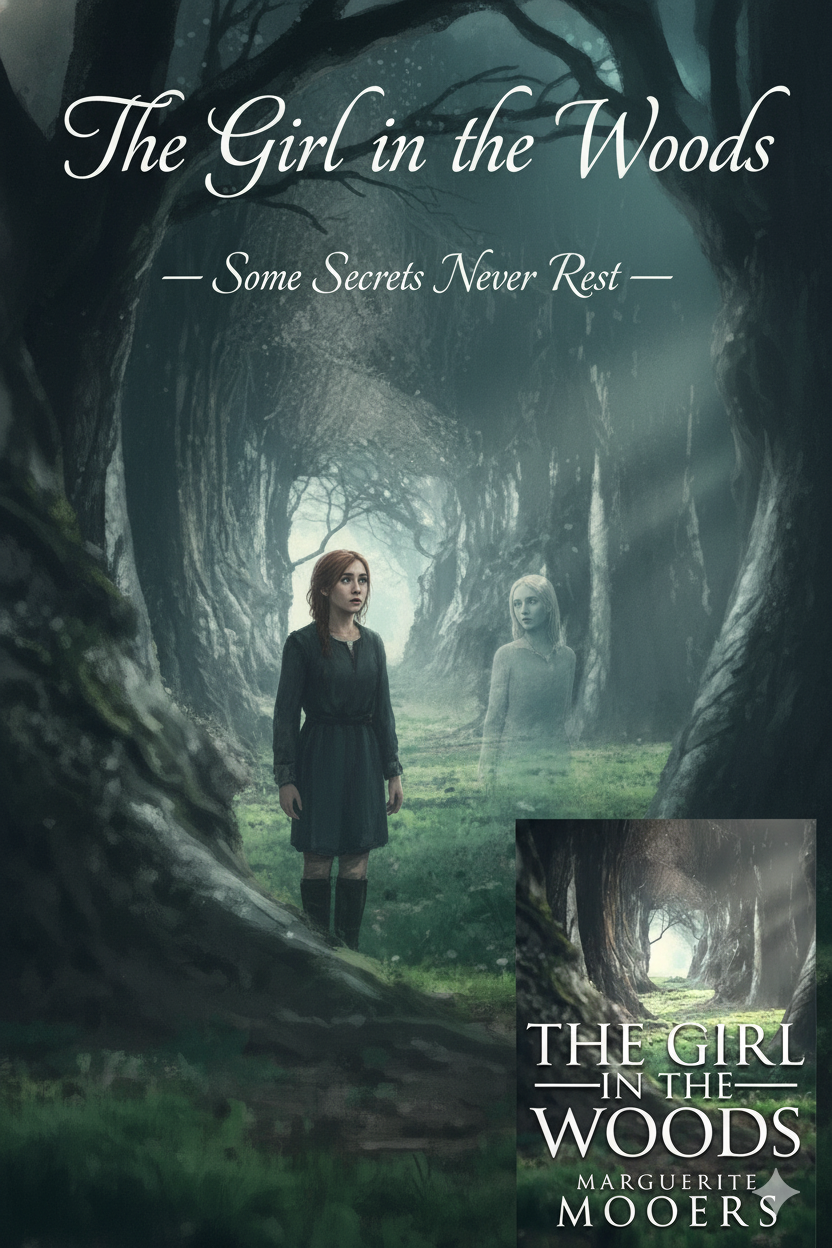
Drew Morgan goes for a walk in the woods. Something, somehow, goes wrong. She becomes lost, wounded, starving. Days pass in disorientation. Then the ghost of a murdered girl appears. Finally, with rescue and search dogs, Drew’s friends discover the body. But the danger is far from over because the killer remains free and the woods hold more than trees—they hold memory, threat, unspoken horrors.
Marguerite Mooers uses the woods not as scenic backdrop but as a character. The trees pressure, shadows shift. Night brings fear. The forest’s silence is deceptive. Sounds are misleading. The turning of leaves, the rustle of branches, the distant wildlife—all become part of the hunt. Drew’s internal landscape matches her external: lost physically, wounded emotionally.
Mystery here is intimate. Drew’s relationship with the forest ranger she loves is conflicted—love as anchor, love as warning. His advice, his disapproval, fears from both sides. Trust becomes fragile when danger hides where you once felt safe. Mooers exploits that contrast: nature can comfort and betray.
The ghost of the murdered girl heightens guilt, loss, remembrance. As Drew heals and investigates, she must confront what she witnessed—even when her mind tried to protect her. Sometimes forgetting is easier, but Mooers shows that forgetting can let danger linger. Memory matters. Pain matters. Both shape who Drew must become.
Also noteworthy is how Mooers writes the rescue process. Dogs searching, people calling, the gap between survivors and those lost. Drew’s isolation becomes universal: we all get lost sometimes. We endure wounds nobody sees. We carry shame, guilt, fear. The woods becomes metaphor for psyche.
Through The Girl in the Woods Mooers asks: what does it mean to find redemption when the path is dark? How much of safety is illusion? When someone you love is near, do you trust them? When alone, do you find strength? The hunt for the murderer becomes a journey back to self.