


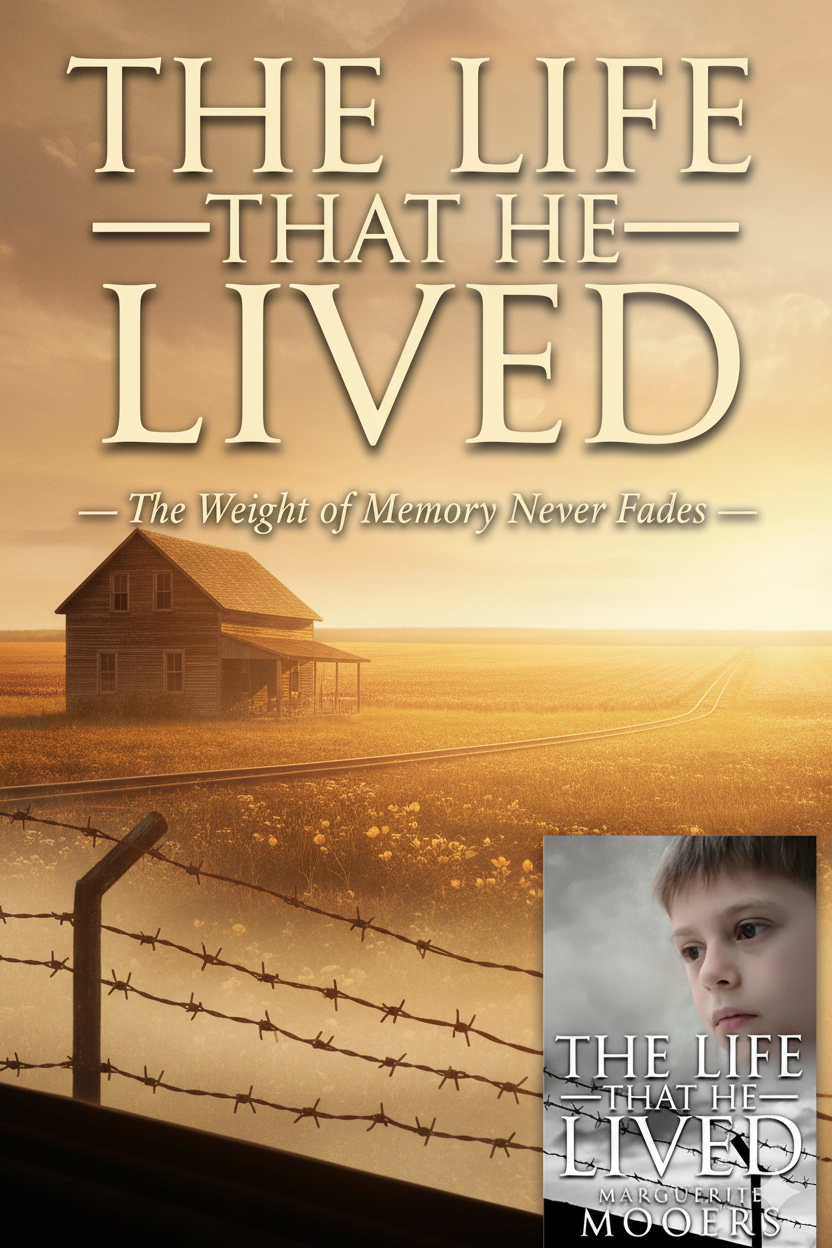
Henry Bower, once a boy who escaped Auschwitz, has lived a lifetime shadowed by losses. His grandson Jason wants to write Henry’s story. But when a neighbor is found dead in mysterious circumstances, and Henry confesses, the confession feels both shocking and strangely expected. Jason must untangle whether Henry is protecting someone, preserving a secret, or hiding from his own conscience.
Mooers dives here into what legacy demands. What do we owe to ancestors? To trauma that predates our own birth? Henry’s life in Nazi Germany, his escape, the people lost—those are not just memory, they are inheritance. They shape who Henry is now: a man who fears exposure, who perhaps believes that silence was his only refuge. Jason wants truth, but truth can be painful.
The rural farm setting belies the weight of history. Mooers puts the horror of the distant past alongside very ordinary life—neighbors arguing, fences shared, the routines of seasons. That contrast heightens the tension: what monstrous things people can endure, how their past can remain secret even while everyday life presses on.
Jason’s role is uneasy. He is grandson, historian, moral judge. When Henry’s confession to murder arises, Jason is torn. On one hand, his respect and love for his grandfather. On the other, the necessity of justice and of truth. Is Henry guilty or trying to take blame to protect something more dangerous? The mystery accrues complexity when guilt is not clear. Could Henry’s deserved suffering have become a cloak for undeserved guilt?
Moor-ers uses suspense in human relationships. Not every suspect is sinister; sometimes the greatest suspicion is in knowing your loved ones only in pieces. Jason’s search reveals neighbors with grudges, hidden animation of old wounds, people who might benefit from Henry’s downfall or silence.
There is also the theme of confession. Henry’s willingness to say what he did can be interpreted many ways: humility, brokenness, guilt, or a desire to atone. Mooers doesn’t give easy morality. She refuses heroes or villains. Instead she offers people who are damaged, who make choices under duress, who carry secrets.
Reading The Life That He Lived makes you think about what histories we carry and what we hide. It reminds us that every person’s present is shaped by their past, sometimes in ways we never see until someone pulls a thread.